
Custom Rebound Force Spring Tube
Project Background
Our company has long been dedicated to the R&D and manufacturing of push-pull outer casings, flat wrap steel outer casings, PTFE tubes for the electronic medical industry, and various high-precision small-diameter tubular materials, with 30 years of mature process capabilities and a comprehensive quality control system. The customer proposed new technical requirements for the originally supplied products — crush testing, requiring the casing to rebound to less than a specified value under fixed fixtures, standard length, and balanced pressure.
Customer Requirements
Conventional Requirements:
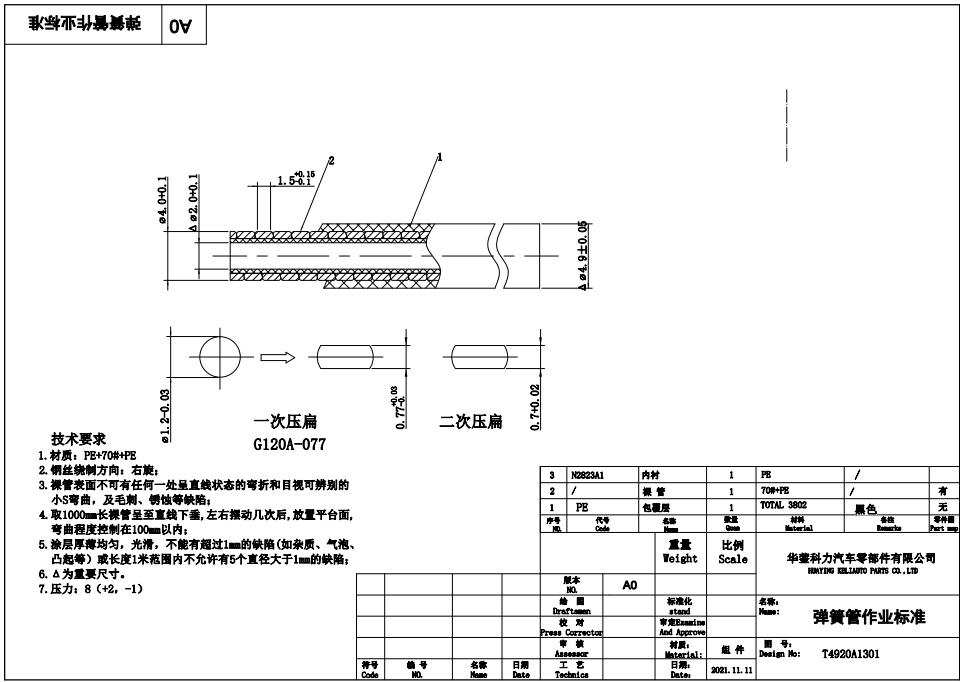
- The customer had been supplied with 4.9mm spring tubes for many years and added crush testing standards.
Core Special Requirements:
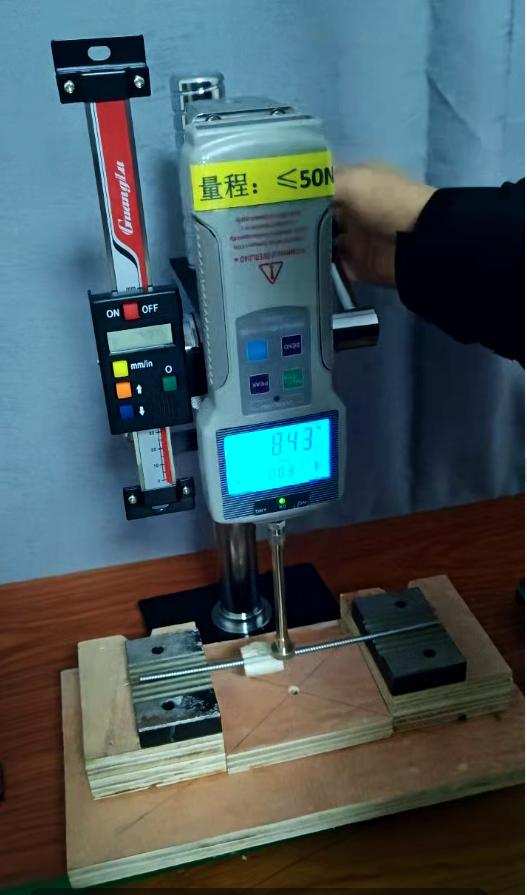
- Preload test tool, distance between two bases: 105mm
- Compression distance from compression head to bottom: 25mm
- Bare tube length: 200mm
- Preload requirement: 8+2/-1
Project Challenges
The core challenge of this project is to meet the newly added stringent performance requirements under the constraint of limited material selection:
Material specified, limited room for elasticity adjustment: The customer had already specified the models and specifications of the steel wire and coating materials, which greatly limited the possibility of optimizing product elasticity through material substitution. We had to achieve a breakthrough in rebound performance without changing the materials.
Multi-factor coupling, high difficulty in rebound control: The final rebound performance of the casing is a comprehensive manifestation of multiple factors, including material elasticity, structural design, and manufacturing stress. With materials and testing standards (fixed fixtures, standard length, balanced pressure) fixed, how to precisely control each process step to achieve the target rebound value is the main technical challenge.
Solutions
To overcome the above challenges, our company approached from two aspects — process optimization and mold improvement — to unlock performance potential within the existing material system:
Fine-tuning of process parameters: Based on the customer-specified material characteristics, we re-optimized key process parameters such as heat treatment and forming. By precisely controlling stress and strain during processing, we reduced internal residual stress in the product, thereby improving its rebound capability after crush testing.
Mold structure optimization design: We re-evaluated and improved the forming mold design. By optimizing the mold’s geometric shape, clearance, and guiding structure, we ensured more uniform force distribution and more precise dimensions during the forming process, ultimately improving the product’s dimensional stability and rebound consistency under standard test conditions.
Results Achieved
The optimized spring casing passed the crush test on the first attempt in third-party testing approved by the customer. Under the customer-specified fixed fixtures, standard length, and balanced pressure conditions, the rebound amount of the spring casing after crushing was stably controlled within the customer’s required tolerance range. Through the synergistic optimization of process and mold, the actual rebound deformation rate was reduced by approximately 40%~50% compared to the initial samples, fully meeting the customer’s new requirements.
Customer Feedback
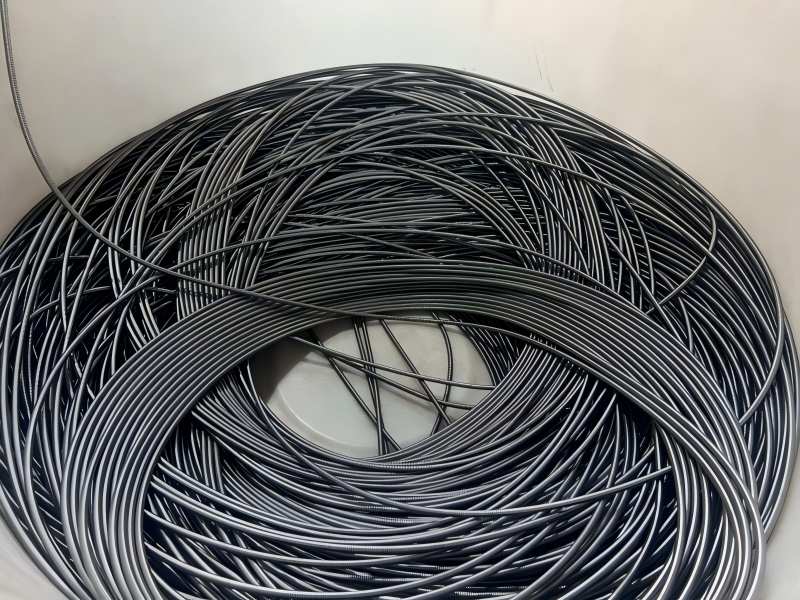
After receiving the batch samples, the customer highly recognized the rebound precision, performance consistency, and appearance quality of this batch of spring tubes, confirmed that the products fully meet the requirements for vehicle installation, and has continued to place follow-up orders. Our company has been included in the customer’s premium supplier system for this product category.
Start a Collaboration by Starting with a Customized Sample