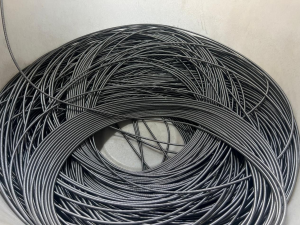
When deciding between flat wrap cable conduit and round-wire reinforced conduit, it’s not just a matter of comparing reinforcement shapes. For OEM engineers, the decision can impact radial deformation, bending behaviour, installation space, cable movement, and long-term reliability of a complete control cable assembly.
Both designs rely on metal reinforcement to support the conduit, but their performance is determined by reinforcement geometry, winding configuration, liner materials, outer coatings and manufacturing consistency.
In this guide, we look at the engineering comparison of flat wrap vs round-wire reinforced cable conduit. It details the structural differences, highlights the performance factors that matter in OEM applications, and gives a practical framework for product validation.
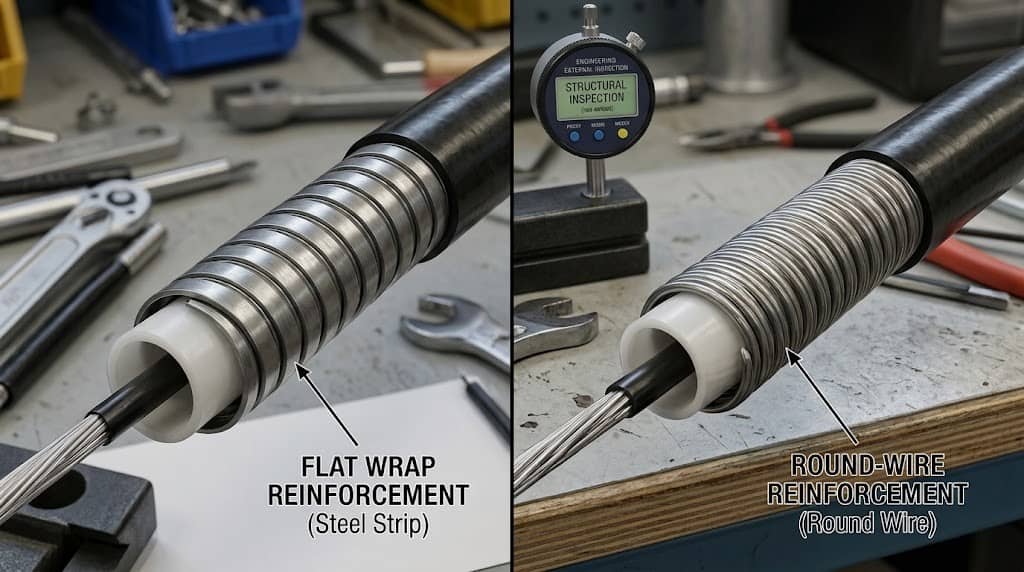
What Is the Difference Between Flat Wrap and Round-Wire Reinforced Conduit?
The primary difference is the geometry and arrangement of the metal reinforcement.
Flat Wrap Cable Outer Casing
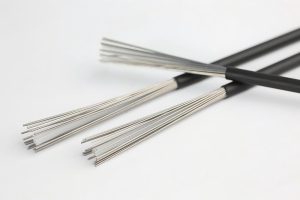
The outer jacket on a flat wrap cable is typically a flat steel wire wound in a spiral around the inner cable channel. In some designs, the casing is lined with plastic and has an outer protective coating.
The flat steel reinforcement provides structural support and allows the casing to follow the routing path required by the application. The final performance is dependent on the steel strip dimension, winding configuration, liner, coating and overall conduit geometry. The main design parameters are:
- Flat steel wire thickness and width.
- Reinforcement winding configuration and consistency.
- Inner diameter and outside diameter.
- Liner material and its interaction with the moving cable.
- Outer coating and environmental exposure requirements.
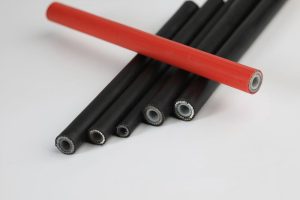
For example, Keli's Flat Wrap Cable Outer Casing is available with different dimensions, liner materials, and coating options. These configurations allow OEMs to evaluate the casing against their specific installation and operating requirements.
Round-Wire Reinforced Cable Conduit
Round-wire reinforced conduit uses round-section metal wire arranged around the conduit, commonly in a helical configuration. Its structural behavior depends on wire diameter, winding pitch, spacing, layer arrangement, and the surrounding materials. Important design considerations include:
- Round-wire diameter and dimensional consistency.
- Winding pitch and spacing between adjacent turns.
- Reinforcement arrangement and layer construction.
- Finished conduit dimensions and allowable deformation.
- Compatibility with the inner cable and end fittings.
Keli also offers Round-Wire Reinforced Conduit within its cable protection product range. Neither reinforcement geometry is automatically superior. The appropriate design depends on the loads, routing constraints, movement requirements, and verified performance of the specific product.
Flat Wrap vs Round-Wire Reinforced Conduit: Engineering Comparison
When evaluating flat wrap cable conduit vs round-wire reinforced conduit, OEMs should compare actual construction details and application performance rather than relying on product names alone.
| Engineering factor | Flat wrap reinforcement | Round-wire reinforcement |
| Reinforcement geometry | Flat or strip-shaped steel wire | Round-section metal wire |
| Winding characteristics | Influenced by strip thickness, width, and winding configuration | Influenced by wire diameter, winding pitch, and spacing |
| Radial compression | Depends on reinforcement geometry, layer arrangement, and applied load | Depends on wire geometry, coil arrangement, and applied load |
| Bending behavior | Influenced by strip dimensions, winding configuration, and complete construction | Influenced by wire diameter, pitch, and complete construction |
| Dimensional control | Requires consistent strip dimensions and winding quality | Requires consistent wire dimensions and winding quality |
| Cable movement | Depends on liner material, internal dimensions, and cable interaction | Depends on liner material, internal dimensions, and cable interaction |
| Validation priorities | Dimensional inspection, compression, bending, and application-specific cycling | Dimensional inspection, compression, bending, and application-specific cycling |
The table identifies factors that require evaluation; it does not establish a universal performance ranking. For instance, a flat reinforcement profile does not automatically guarantee greater compression resistance. Similarly, round-wire construction does not necessarily provide greater flexibility or longer fatigue life.
A meaningful comparison should consider reinforcement dimensions, material properties, winding configuration, liner construction, and finished conduit size. Where possible, candidate products should be evaluated under equivalent loading and environmental conditions.
How Reinforcement Structure Affects Cable Performance
Understanding the relationship between reinforcement geometry and functional performance helps engineers make better decisions when specifying reinforced cable conduit.
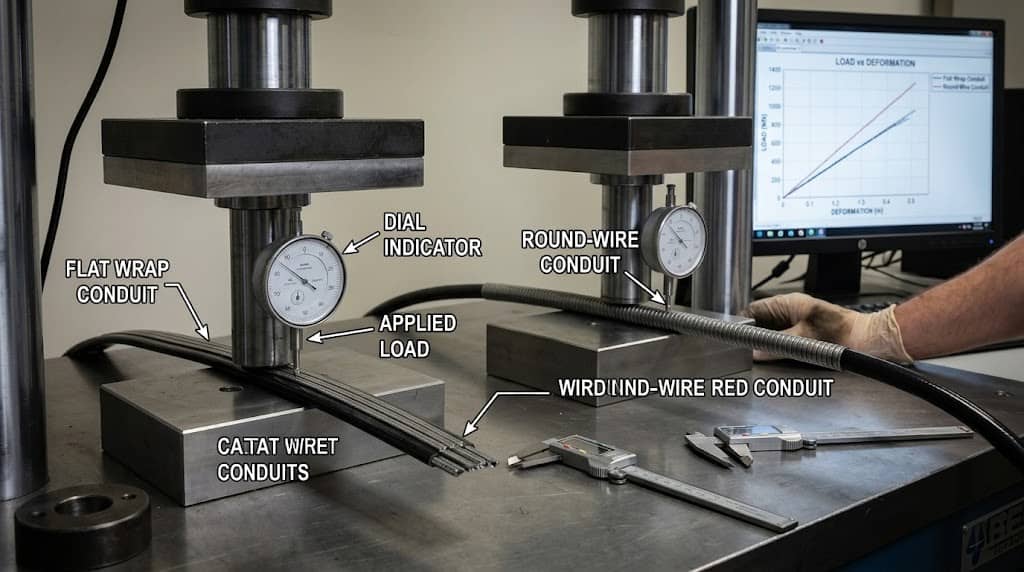
Radial Compression and Deformation
Control cable conduits may be exposed to external forces due to mounting clamps, neighbouring components, installation limitations or mechanical contact during operation. Too much deformation may reduce the usable internal clearance. This can increase the cable friction, restrict movement or cause an inconsistent operating force depending on the assembly design.
Mechanical support is achievable with both flat wrap and round wire constructions. The appropriateness of these elements is determined by the behaviour of the reinforcement and neighbouring layers under actual service loads. OEMs should first determine expected radial load and allowable deformation before selecting a design. Tests should differentiate between temporary elastic deformation and permanent deformation after unloading.
To be able to make meaningful comparisons, the test procedure should specify the loading direction, contact area, applied force, loading rate, temperature and measurement method.
Bending Behavior and Installation Space
In compact mechanical systems, the conduit must often follow a defined routing path without interfering with surrounding components. Bending performance depends on more than reinforcement geometry. Strip thickness, wire diameter, winding pitch, liner properties, and the overall conduit diameter can all affect the response.
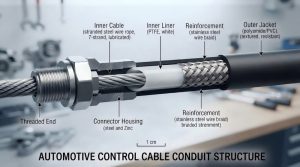
Before approving a control cable conduit structure, engineers should confirm:
- Available installation space and routing geometry.
- The specified minimum bend radius.
- Whether the conduit remains stationary or moves during operation.
- Potential interference with connectors and mounting points.
- Cable travel and operating force under the intended routing conditions.
Minimum bend radius should be established from applicable product specifications or validated engineering data. It should not be inferred solely from the reinforcement type.
Dynamic Cycling, Wear, and Long-Term Stability
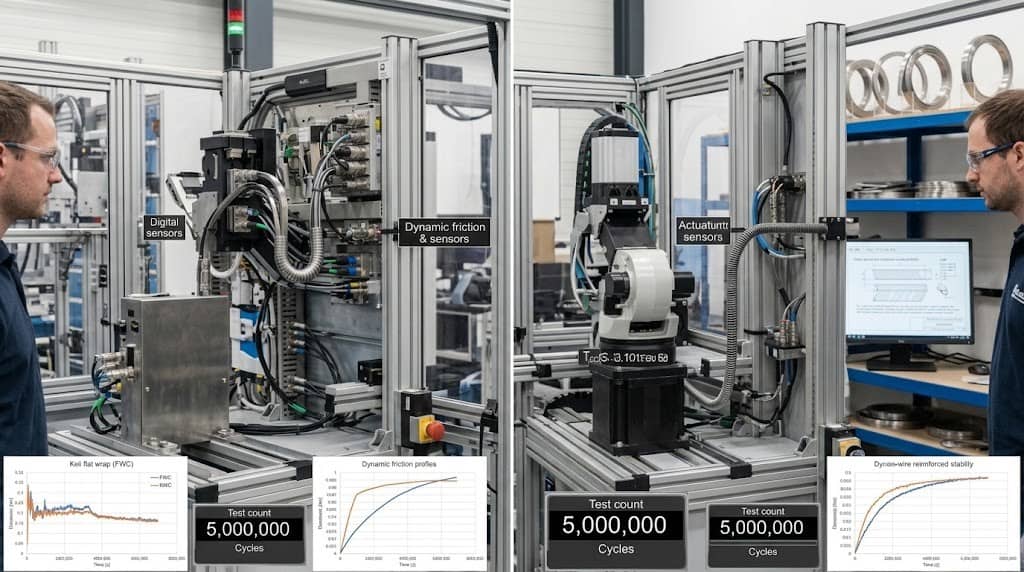
For control cable systems actuated frequently, the conduit shall retain its functional characteristics after repeated operating cycles. Failure modes may include reinforcement fatigue, local deformation, surface wear, damage to protective coatings, and variation in cable friction.
Dynamic fatigue life cannot be assessed by static compression tests. Similarly, a positive bending test does not prove resistance to temperature cycling, corrosion or long-term wear. OEMs should consider compression, bending, and dynamic durability separately. The validation plan should simulate the movement, load, routing and environmental conditions anticipated in service.
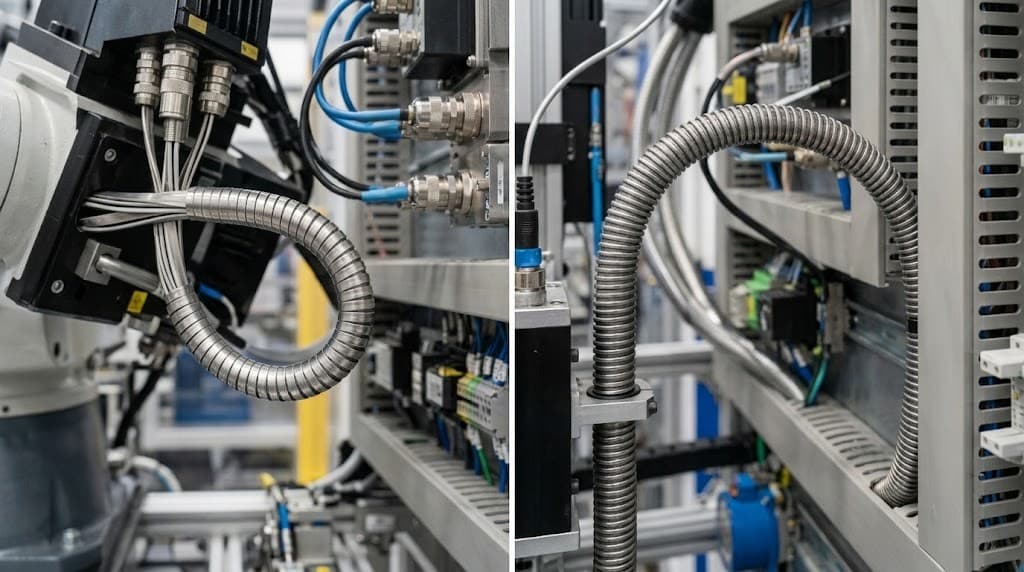
What is the Best Reinforced Cable Conduit for OEMs?
The choice depends on the functional requirements of the application rather than a general preference for one reinforcement geometry
For Tight Routing and Packaging Constraints
Compare finished dimensions, bend radius, connector clearance and room for assembly when installation space is limited.
Both types of reinforced design, flat wrap and round wire reinforced, can be acceptable if the dimensional and functional requirements are met. The final decision should be made after drawing review and, if necessary, an installation test.
For Applications That Require Specific Compression
Identify the magnitude, direction, duration and location of any significant external loadings. Determine the suitability of each candidate for the specified deformation limits and functional requirements of the finished cable assembly.
Don’t assume that a thicker reinforcement or a particular wire shape will always work better. The whole structure and its interaction with the supporting elements must be considered.
For Cable Systems That Move Frequently
For repeated cable actuation applications, consider dynamic cycling, friction stability, wear and bending fatigue. The validation set-up should be representative of the expected operating cycle, movement distance, speed, routing path and environmental conditions. Where practicable, test the conduit with the proposed inner cable and end fittings.
The best design is the one that meets application requirements with verified performance and acceptable manufacturing consistency.
How Should OEMs Validate the Selected Conduit Structure?
A structured validation plan helps identify potential problems before the product enters mass production.
| Requirement | What to verify | Evidence to request |
| Dimensional compatibility | Inner diameter, outside diameter, length, and critical tolerances | Approved drawing and dimensional inspection report |
| Compression resistance | Deformation under the specified load | Compression test procedure and results |
| Routing compatibility | Fit within the installation envelope and required bend radius | Drawing review and routing trial |
| Dynamic performance | Cable movement and functional changes during cycling | Dynamic cycling and functional test records |
| Environmental suitability | Performance under specified temperature, moisture, corrosion, or chemical exposure | Applicable environmental test results |
| Assembly compatibility | Fit and function with the inner cable and end fittings | Assembly inspection and functional validation |
| Production consistency | Repeatability of critical dimensions and construction | Inspection records and agreed acceptance criteria |
Not all applications require all tests. The validation plan should be based on the operating environment, the consequences of failure and customer requirements. For critical dimensions and functional characteristics, OEMs should define inspection methods and acceptance criteria prior to production approval.
It is equally important to understand the difference between prototype validation and routine production inspection. The prototype test will demonstrate performance under the tested conditions but does not prove that each production batch will be identical. For projects that require additional manufacturing documentation, OEMs can review the manufacturer’s company and manufacturing capabilities as part of the supplier qualification process.
What Should OEMs Specify When Comparing Reinforced Conduit Designs?
When the reinforcement design has not yet been finalized, OEMs should provide enough technical information for the manufacturer to assess candidate constructions.
- Installation and dimensions: Specify the available routing space, target inside and outside diameters, overall length, interface dimensions, and critical tolerances.
- Mechanical operating conditions: Describe external loads, bending requirements, movement frequency, cable travel, and any limits on deformation or operating force.
- Environmental exposure: Identify the expected temperature range, moisture, corrosion, chemicals, vibration, and other relevant conditions.
- Assembly requirements: Specify the intended inner cable, end fittings, mounting method, and interfaces with surrounding components.
- Validation requirements: Identify the tests needed for approval, applicable acceptance criteria, inspection records, and traceability requirements.
If the design is still flexible, ask the supplier to explain the trade-offs between available constructions before freezing the drawing. For customized products, Keli's control cable and conduit product range provides a starting point for reviewing available solutions. OEMs can then submit their drawings, samples, and operating requirements for technical evaluation.
Flat Wrap vs Round-Wire Reinforced Conduit: Final Decision Checklist
Before approving a reinforced cable conduit for an OEM project, confirm that:
- The proposed structure meets dimensional and installation requirements.
- Compression behavior has been verified under representative loading conditions.
- The required bend radius and routing path have been confirmed.
- Dynamic cycling and environmental tests reflect the intended application where necessary.
- The conduit is compatible with the inner cable and end fittings.
- The supplier can document the agreed specifications and inspection criteria.
Neither flat wrap nor round-wire reinforcement is the correct choice for every application. The appropriate solution is the design that satisfies the mechanical, dimensional, environmental, and manufacturing requirements with sufficient verification.
To discuss a specific application, contact Keli's engineering and sales team with the installation dimensions, operating conditions, and relevant drawings or samples.
Frequently Asked Questions
Q1. What is the main difference between flat wrap and round-wire reinforced cable conduit?
The main difference is the geometry and arrangement of the reinforcement. These factors influence how the conduit responds to mechanical loads and bending, but actual performance depends on the complete construction, dimensions, and material properties.
Q2. Is flat wrap cable conduit more flexible than round-wire reinforced conduit?
Not necessarily. Flexibility depends on reinforcement dimensions, winding pitch, layer construction, conduit diameter, and materials. OEMs should compare specific products under equivalent bending conditions rather than assume one structure is always more flexible.
Q3. Which reinforced cable conduit is better for high compression loads?
Neither structure is universally superior. Selection should be based on the required load, allowable deformation, conduit geometry, and comparative compression testing under representative application conditions.
Q4. Can flat wrap and round-wire reinforced conduit be used interchangeably?
Not without engineering verification. The total cable assembly is affected by variations in dimensions, bending behaviour, reinforcement construction and interfaces. Replacement should be done after drawing review and an appropriate functional test is done.
Q5. What information should OEMs provide in comparing reinforced cable conduit designs?
The OEMs should provide installation dimensions, expected loads, bending requirements, movement frequency, exposure to different environments and interface specifications. These inputs are used by manufacturers to assess candidate structures and establish appropriate validation procedures.