Push-pull cables and Bowden cables are two ways of transmitting mechanical movement through flexible routing paths. These are often found in automotive controls, industrial machinery, agricultural equipment, marine applications and other places where a rigid rod cannot connect the actuator to the controlled mechanism.
But are a push-pull cable and a Bowden cable the same thing?
Not necessarily. The terminology can overlap because a push-pull cable can use a Bowden-style flexible housing. The more useful engineering distinction is how the cable assembly is designed to transmit force. A push-pull cable is specifically configured to transmit both tensile and compressive forces, while a conventional Bowden cable is commonly used for pulling force through a flexible housing. However, push-pull Bowden constructions also exist.
For OEM applications, the correct selection should therefore be based on force direction, stroke, friction, bend radius, compression resistance, temperature, routing and service-life requirements—not simply the product name.
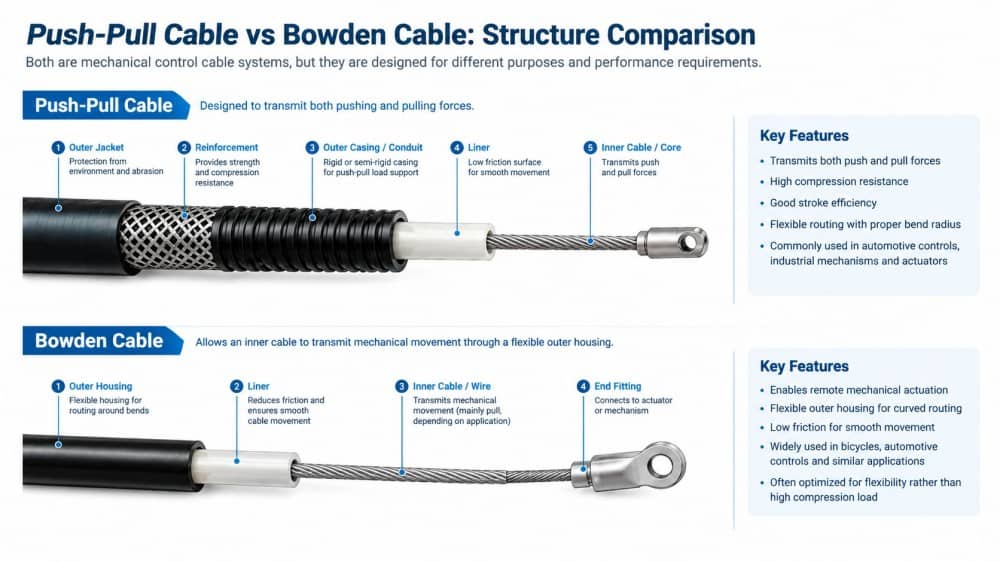
Push-Pull Cable vs Bowden Cable: Key Differences
| Parameter | Push-Pull Cable | Conventional Bowden Cable |
| Primary function | Transmit push and pull forces | Flexible mechanical force transmission, commonly pull |
| Inner element | Reinforced cable, wire or rod | Usually flexible inner cable/wire |
| Push capability | Designed for positive compression loading | Usually limited unless specifically designed for push operation |
| Pull capability | Yes | Yes |
| Outer conduit | Provides guidance and compression support | Provides flexible routing and housing support |
| Friction | Critical | Critical |
| Bend radius | Important | Very important |
| Stroke efficiency | Critical | Important |
| Typical applications | Door locks, seat adjustment, actuators, mechanical controls | Brake, throttle, shift, release and remote control systems |
| Main design priority | Bidirectional force and controlled stroke | Flexible routing and efficient force transmission |
The key difference is force transmission. A push-pull cable is engineered for controlled movement in both directions, while a conventional Bowden arrangement is generally optimized around tension in the inner cable. The exact construction should always be verified against the application.
What Is a Push-Pull Cable?
A push-pull cable is a mechanical control assembly designed to transmit both pulling and pushing forces between two remotely located components.
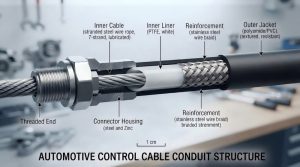
A typical assembly consists of:
- An inner cable or core
- A low-friction liner
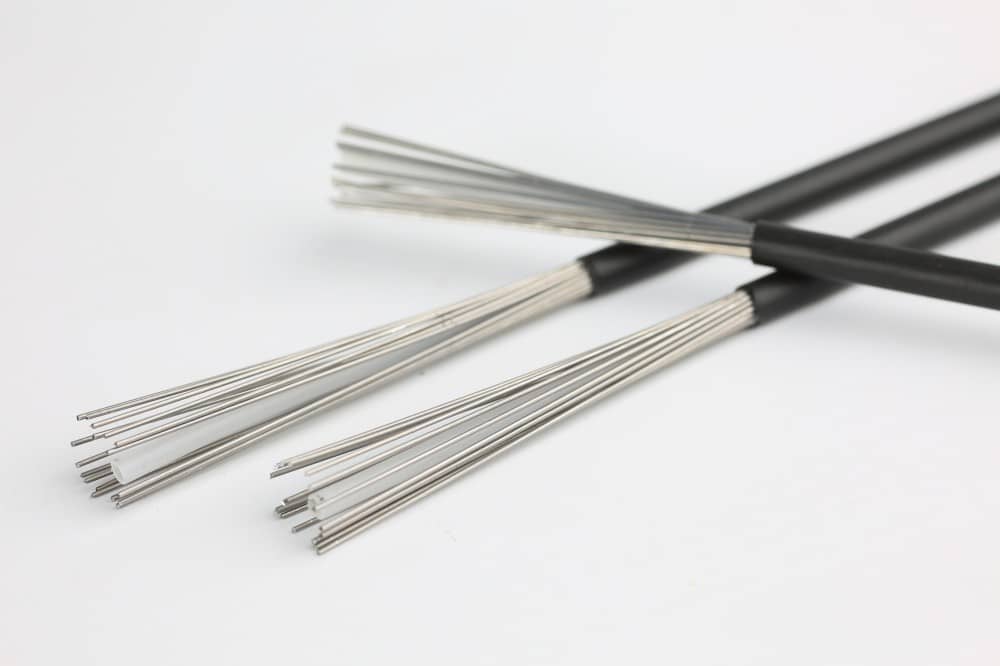
- A reinforced outer casing or conduit
- An outer protective layer
- End fittings or connection components
When the actuator pulls the inner element, the mechanism moves in one direction. When the actuator pushes it, the mechanism moves in the opposite direction.
The important difference from a simple pull cable is that the inner element must be stable under compression. The push-pull cable conduit thus plays a significant structural role, guiding the inner element and resisting deformation and maintaining the required geometry during operation. That's why they are useful in push-pull systems where you want positive movement in both directions without the need for a return spring.
Keli manufactures push-pull outer casing and related control cable components for application-specific mechanical control systems. Its product portfolio also includes reinforced cable casings and complete control cable solutions for automotive and industrial applications.
What Is a Bowden Cable?
A Bowden cable is a flexible mechanical transmission system consisting of an inner cable or wire that moves inside an outer housing.
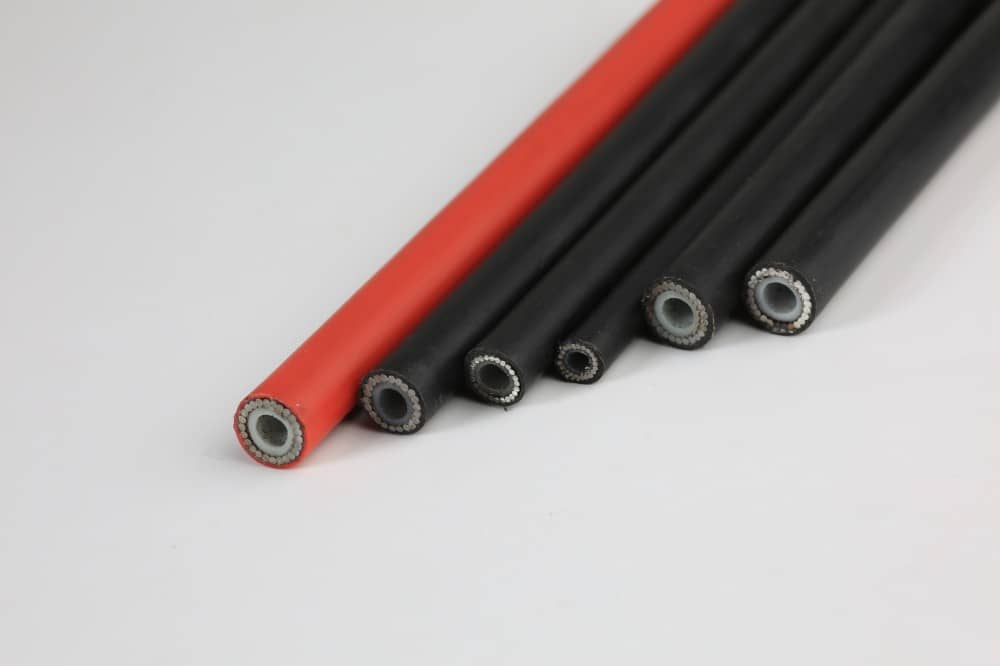
The housing typically combines:
- An inner liner that supports smooth cable movement
- A structural reinforcement layer
- An outer protective sheath
The main advantage of a Bowden cable is that it is easier to route. This enables the cable to follow curved paths through a vehicle or machine rather than having to employ a rigid rod or series of mechanical linkages.
The inner cable is used in tension, as is normal for traditional Bowden cable applications. Examples are mechanical release, brake and throttle systems. The term Bowden cable can also refer to constructions that can transmit both push and pull forces
When searching for a Bowden cable conduit, this distinction is important. It is not the name itself that determines whether the assembly can reliably withstand compression and transmit positive push forces. It is the housing construction.
How Does Force Transmission Differ?
The most important engineering difference is what happens when the inner cable is placed under compression.
Push-pull cable
A push-pull system is designed so that:
Actuator → Push/Pull Force → Inner Core → Controlled Mechanism
During pulling, the inner core carries tensile load. During pushing, the inner core carries a compressive load while the outer casing provides the necessary support and guidance.
Therefore, push-pull performance depends strongly on:
- Core rigidity
- Casing compression resistance
- Liner friction
- Bend radius
- Cable-to-conduit clearance
- End fitting alignment
- Stroke efficiency
Bowden cable
In a conventional pull-oriented Bowden system:
Actuator → Pull Force → Inner Cable → Controlled Mechanism
The outer housing establishes the cable route and reacts against the cable force. The housing must therefore maintain its geometry while the inner cable moves through it.
If a Bowden-style construction is intended for push-pull operation, its inner element and housing must be specifically engineered for compressive loading. This is why it is risky to assume that any Bowden cable conduit can automatically replace a push-pull cable conduit.
Push-Pull Cable vs Bowden Cable: Performance Factors
1. Compression Resistance
One of the most important selection criteria for a push-pull system is its resistance to compression. When the inner cable is pushed, components not properly supported may buckle, deform or lose stroke. The casing must therefore give stable guidance and must not alter in length or shape.
Compression resistance is still important for standard pull-only Bowden systems, as housing compression can reduce motion efficiency, but the requirement is different than for a system designed for positive push transmission.
2. Friction
Friction directly affects the operating force required to move the cable.
Friction increases when:
- The routing path contains tight bends
- The cable is misaligned
- The liner has unsuitable surface characteristics
- The cable or conduit dimensions are poorly matched
- The operating temperature changes material behavior
- Contamination enters the system
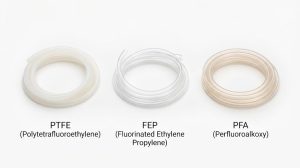
A low-friction liner can improve cable movement and reduce actuator load. Depending on the application, liner materials such as PE, POM, PTFE, PA or PBT can be considered.
Keli's flat wrap cable outer casing product line, for example, offers multiple liner options for different cable movement and operating requirements.
3. Bend Radius
The flexible cable system should follow the installation path without too much friction or mechanical stress. The smaller the bend radius the more difficult it will be to keep the cable moving smoothly. This effect is particularly important if the cable is always working in the same curved path.
Therefore, when specifying a push-pull cable conduit, engineers must define both the static installation bend radius and the dynamic bend conditions.
4. Stroke Efficiency
Stroke efficiency describes how effectively movement at the actuator is transferred to the controlled mechanism. Cable stretch, casing deformation, friction and routing geometry can all affect effective stroke.
For applications such as door locks and seat adjustment mechanisms, predictable movement is often more important than simply achieving a low initial operating force.
5. Temperature and Environment
Cable conduit performance can change significantly with temperature and environmental exposure.
The selection may need to account for:
- High and low temperatures
- Water and humidity
- Oil and lubricants
- Dust
- Salt spray
- Chemicals
- Abrasion
- Vibration
Material selection should therefore be based on the complete operating environment rather than temperature alone.
When Should You Choose a Push-Pull Cable?
A push-pull cable is generally appropriate when the mechanism requires positive movement in both directions.
Typical examples include:
- Automotive door lock systems
- Seat adjustment mechanisms
- Shift mechanisms
- Mechanical actuators
- Agricultural machinery controls
- Marine controls
- Industrial mechanical controls
A push-pull cable is particularly useful when a return spring would add complexity or when the controlled mechanism must accurately follow movement at the input end.
For automotive applications, Keli provides push-pull outer casings and control cable solutions designed around application-specific routing, mechanical movement and environmental requirements.
When Is a Bowden Cable More Suitable?
A conventional Bowden cable is often suitable when the primary requirement is to transmit pulling force through a flexible route.
Typical applications include:
- Mechanical release systems
- Brake mechanisms
- Throttle controls
- Clutch controls
- Remote actuation
- Bicycle control systems
- Automotive mechanical controls
Its main advantage is the ability to route mechanical movement around bends while keeping the actuator and controlled mechanism physically separated. However, if the mechanism requires positive pushing as well as pulling, the cable assembly should be specifically designed and validated for bidirectional operation.
How to Choose the Right Cable Conduit for an OEM Project
For OEM applications, cable conduit selection should begin with the mechanical requirements rather than the terminology used by the buyer or supplier.
Step 1: Define the movement
Specify whether the system requires:
- Pull only
- Push only
- Push and pull
- Repeated bidirectional movement
Step 2: Define the load
Determine the required tensile and compressive loads, including peak loads and expected operating cycles.
Step 3: Define the routing
Measure:
- Total cable length
- Minimum bend radius
- Number of bends
- Installation space
- Fixed mounting points
- Dynamic movement
Step 4: Select the liner and reinforcement
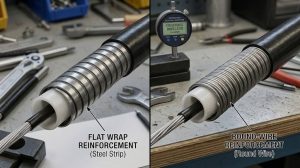
The liner affects friction and cable movement. Reinforcement affects mechanical support, compression resistance and dimensional stability.
For demanding control systems, reinforced constructions such as flat-wrap or other steel-reinforced cable casings may be considered depending on the application.
Step 5: Define the operating environment
Specify temperature, moisture, chemicals, abrasion, vibration and other environmental factors.
Step 6: Validate the assembly
Testing should consider:
- Operating force
- Stroke efficiency
- Push-pull rigidity
- Bend behavior
- Durability
- Temperature resistance
- Dimensional stability
For automotive applications, Keli also references QC/T 209-2007 for flexible shafts and provides additional testing considerations for push-pull products, including stroke efficiency and push-pull rigidity.
Push-Pull Cable vs Bowden Cable for Automotive Applications
Automotive systems frequently require mechanical control through limited installation spaces. Shift, brake, accelerator, clutch, door-lock and seat-adjustment mechanisms can all require controlled cable routing.
The right solution depends on the mechanism. For example:
- Door lock or seat adjustment → positive bidirectional movement may favor a push-pull design.
- Release or pull mechanism → a conventional Bowden-style cable may be sufficient.
- High vibration or abrasion → reinforced outer casing may be required.
- Long routed cable → friction and bend radius become critical.
- High-temperature environment → liner and outer coating materials must be selected accordingly.
Keli's automotive and new-energy-vehicle applications include push-pull outer casings, flat-wrap cable casings, and control cable components for mechanical control systems.
Push-Pull Cable vs Bowden Cable: OEM Selection Checklist
Before ordering a push-pull cable conduit or Bowden cable conduit, an OEM engineering team should provide:
| Specification | Why It Matters |
| Cable/core diameter | Determines conduit compatibility |
| Conduit ID and OD | Controls clearance and installation |
| Required stroke | Determines movement range |
| Push load | Determines compression requirements |
| Pull load | Determines tensile requirements |
| Minimum bend radius | Influences friction and fatigue |
| Operating temperature | Determines material selection |
| Environmental exposure | Determines coating and liner |
| Cycle life | Determines durability requirements |
| End fittings | Ensures assembly compatibility |
| Annual volume | Supports manufacturing and tooling planning |
Providing a drawing, sample or complete application specification can significantly simplify OEM development and reduce the risk of selecting an unsuitable cable construction.
FAQ
Q1: Is a push-pull cable the same as a Bowden cable?
A1: Not always. Bowden describes a flexible inner-cable-and-housing arrangement, while push-pull describes the required force-transmission capability. A Bowden-style construction can be engineered for push-pull operation.
Q2: Can a Bowden cable push as well as pull?
A2: Some Bowden cable designs can transmit both forces, but conventional pull-oriented designs are not automatically suitable for compression loading. The inner element and housing must be specifically designed and tested for push operation.
Q3: What is the main advantage of a push-pull cable?
A3: Its main advantage is positive bidirectional mechanical control. The same assembly can transmit both pulling and pushing forces, reducing the need for return springs or separate mechanisms.
Q4: Does bend radius affect cable friction?
A4: Yes. Tight bends increase contact between the inner cable and liner, which can increase friction and operating force. Routing geometry should therefore be considered when specifying both the cable and conduit.
Q5: What is a push-pull cable conduit?
A5: A push-pull cable conduit is the outer casing or housing that guides the inner cable while providing the structural support needed for push-pull operation. Its stiffness, reinforcement, liner and dimensions affect system performance.
Q6: How should OEMs choose between a Bowden cable and push-pull cable?
A6: Start with force direction, load, stroke, bend radius, friction, operating environment, and required service life. The terminology should follow the actual mechanical requirements, not replace the engineering specification.